Overview
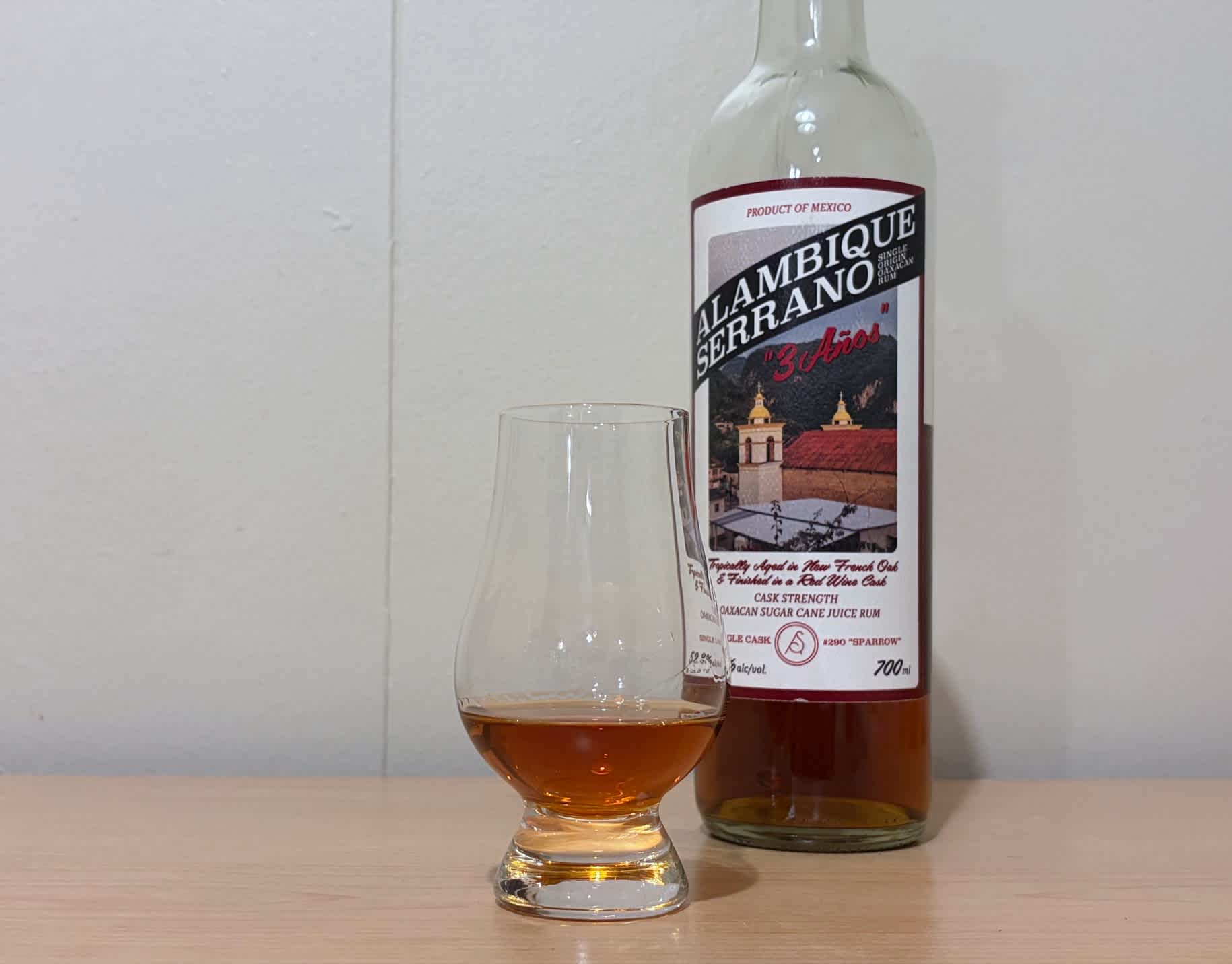
Brand: Alambique Serrano
Origin: Distillería de Rommel Krassel, Santa María Tlalixtac, Oaxaca, Mexico
Still: Krassel Column
Age: 3 years, 6 months
Finish: New French Oak & ex-Red Wine
ABV: 52.8%
For a landmark review like #300, we're going for a brand that is not shy about pumping out rum, and a bottle that I got for a landmark life event.
During my bachelor party earlier this year, my groomsmen and I went to Chicago's Sparrow, not necessarily a "rum bar" but a "bar that really loves rum". Located in the Gold Coast neighborhood, this was my second time visiting, and I highly recommend adding this to the itinerary for any trip to the Windy City.
Like many other rum-centric bars, they have rotations of staff-selected single casks available for purchase, much like the bottle in front of me today.
Alambique Serrano 3 Años Single Cask #290 comes from Oaxaca's Distillería de Rommel Krassel, from a base of sugarcane juice and distilled using their custom Krassel column still. The rum follows the 3 Años aging program with 26 months of new French Oak aging, before being aged an additional 16 months in ex-red wine casks. In July 2025, Sparrow selected this cask #290 for their bar.
Appearance
Red-brown, low viscosity
Nose
Red licorice, baked strawberries, brown sugar, dried cranberries, nutmeg, cinnamon
Palate
Toasted sugarcane, cinnamon, stewed cranberries, baked strawberries, cloves
Finish
Long, fruity, spiced; cinnamon, strawberries, nutmeg, cloves, muscovado sugar
Rating: 7/10
Summary
Sparrow chose a really solid cask for the bar. Despite the short amount of aging on this, both casks are quite prominent when tasting through.
Confectionary flavors, red fruits, and baking spices hit all over the nose, palate, and finish. This includes licorice and brown sugar joining the agricultural sugarcane notes, which balance against more earthen clove, cinnamon, and nutmeg.
As far as Alambique Serrano rums go, this hits the expected marks but doesn't stand out. That is to say, this balances everything very well, and presents itself at a remarkably approachable proof point.